Chang ZENG
Chang ZENG
Home
News
Publications
Skills
Activities
Experience
Posts
Light
Dark
Automatic
1
Speech Codec Probing from Semantic and Phonetic Perspectives
We probe widely used speech tokenizers and show they encode phonetic structure much more strongly than lexical-semantic content.
Xuan Shi
,
Chang Zeng
,
Tiantian Feng
,
Shih-Heng Wang
,
Jianbo Ma
,
Shrikanth Narayanan
PDF
ArXiv
Automatic Estimation of Speaker Diarization Error Rate Based on Features of Audio Quality and Speaker Discriminability
A reference-free method that predicts speaker diarization error rate directly from audio using quality and speaker-discriminability features.
Kenkichi Ishizuka
,
Chang Zeng
,
Masaki Ono
,
Taiichi Hashimoto
Cite
DOI
IEEE Xplore
ICASSP Program
A Semantically Consistent Dataset for Data-Efficient Query-Based Universal Sound Separation
We propose Hive, a semantically consistent 2.4k-hour dataset for data-efficient universal sound separation with strong zero-shot generalization.
Kai Li
,
Jintao Cheng
,
Chang Zeng
,
Zijun Yan
,
Helin Wang
,
Zixiong Su
,
Bo Zheng
,
Xiaolin Hu
PDF
Code
Dataset
ArXiv
HF Dataset (3rd Party)
DrivingScene: A Multi-Task Online Feed-Forward 3D Gaussian Splatting Method for Dynamic Driving Scenes
DrivingScene reconstructs dynamic 4D driving scenes online from two surround-view frames with strong quality and efficiency.
Qirui Hou
,
Wenzhang Sun
,
Chang Zeng
,
Chunfeng Wang
,
Hao Li
,
Jianxun Cui
PDF
ArXiv
PAGS: Priority-Adaptive Gaussian Splatting for Dynamic Driving Scenes
PAGS uses semantic priorities in Gaussian Splatting to improve dynamic driving-scene quality and efficiency, achieving high fidelity with very fast rendering.
Wenzhang Sun
,
Chang Zeng
,
Chunfeng Wang
,
Hao Li
,
Jianxun Cui
PDF
ArXiv
SonicSim: A Customizable Simulation Platform for Speech Processing in Moving Sound Source Scenarios
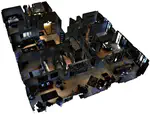
SonicSim is a customizable simulation toolkit and benchmark that improves real-world generalization for moving-source speech processing.
Kai Li
,
Wendi Sang
,
Chang Zeng
,
Runxuan Yang
,
Guo Chen
,
Xiaolin Hu
PDF
Code
ArXiv
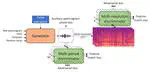
InstructSing: High-Fidelity Singing Voice Generation via Instructing Yourself
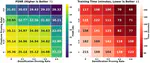
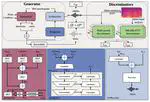
This paper presents a novel neural vocoder called InstructSing, which can converge much faster compared with other neural vocoders while maintaining good performance by integrating differentiable digital signal processing and adversarial training.
Chang Zeng
,
Chunhui Wang
,
Xiaoxiao Miao
,
Jian Zhao
,
Zhonglin Jiang
,
Yong Chen
PDF
Cite
Project
DOI
SLT2024
Spoofing-Aware Speaker Verification Robust Against Domain and Channel Mismatches
We propose an integrated spoofing-aware ASV framework robust to domain and channel mismatch, with strong gains on the CNComplex benchmark.
Chang Zeng
,
Xiaoxiao Miao
,
Xin Wang
,
Erica Cooper
,
Junichi Yamagishi
PDF
CrossSinger: A Cross-Lingual Multi-Singer High-Fidelity Singing Voice Synthesizer Trained on Monolingual Singers
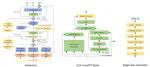
This paper presents CrossSinger, a cross-lingual singing voice synthesizer based on Xiaoicesing2. It tackles the challenge of creating a multi-singer high-fidelity singing voice synthesis system with cross-lingual capabilities using only monolingual singers during training. The system unifies language representation, incorporates language information, and removes singer biases. Experimental results show that CrossSinger can synthesize high-quality songs for different singers in various languages, including code-switching cases.
Xintong Wang
,
Chang Zeng
,
Jun Chen
,
Chunhui Wang
PDF
Cite
Code
Dataset
Project
ASRU2023
HiFi-WaveGAN: Generative Adversarial Network with Auxiliary Spectrogram-Phase Loss for High-Fidelity Singing Voice Generation
This paper introduces HiFi-WaveGAN, a system designed for real-time synthesis of high-quality 48kHz singing voices from full-band mel-spectrograms. It improves upon WaveNet with a generator, incorporates elements from HiFiGAN and UnivNet, and introduces an auxiliary spectrogram-phase loss to enhance high-frequency reconstruction and accelerate training. HiFi-WaveGAN outperforms other neural vocoders like Parallel WaveGAN and HiFiGAN in quality metrics, with faster training and better high-frequency modeling.
Chunhui Wang
,
Chang Zeng
,
Jun Chen
,
Yuhao Wang
,
Xing He
PDF
Cite
Project
DOI
ArXiv
»
Cite
×